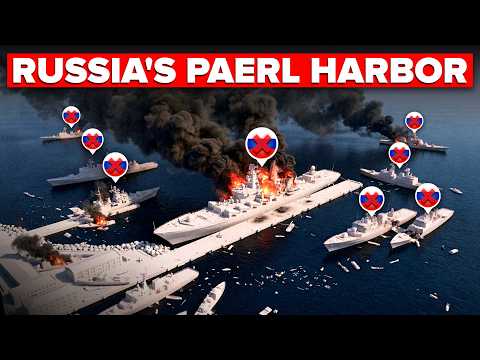
Recent Ukrainian military actions have reportedly inflicted significant damage on Russia's Black Sea Fleet, effectively erasing its naval port presence. The strikes, targeting key Russian naval assets and infrastructure, mark a turning point in the conflict, shifting the strategic maritime advantage.
Historical Context: Black Sea Naval Warfare
The Black Sea has historically been a critical strategic waterway, serving as a vital trade route and a theater for naval power projection. Russia's dominance in the Black Sea has been a cornerstone of its regional influence for centuries, dating back to the Crimean War. The current conflict in Ukraine has challenged this dominance, with Ukraine employing innovative tactics, including drone warfare, to target Russian naval assets. Previous incidents, such as the sinking of the Moskva, the flagship of the Black Sea Fleet, signaled a shift in the naval balance of power. These events highlight the vulnerability of even advanced naval vessels to modern asymmetric warfare.
Analysis: Implications for Regional Power Dynamics
The reported neutralization of Russia's Black Sea naval port has far-reaching implications. Militarily, it weakens Russia's ability to project power in the region and conduct amphibious operations. Politically, it emboldens Ukraine and its allies, demonstrating the effectiveness of their resistance. Economically, it disrupts trade routes and increases the cost of maritime insurance. For countries in Africa that rely on Black Sea trade routes, such as Zimbabwe, this could lead to increased import costs and potential disruptions in supply chains. The instability in the Black Sea could exacerbate existing economic challenges in Zimbabwe, which is already grappling with inflation and currency devaluation. The situation also underscores the importance of diversifying trade routes and building resilience against geopolitical shocks.
Impact: Economic and Geopolitical Repercussions
The real-world consequences of Ukraine's actions are significant. According to military analyst Dr. Anya Petrova, “The damage inflicted on the Russian Black Sea Fleet will take years to repair, fundamentally altering the balance of power in the region.” Insurance rates for ships operating in the Black Sea have reportedly tripled, and several major shipping companies have rerouted their vessels. This has a direct impact on commodity prices, particularly for grain and oil, which are heavily reliant on Black Sea shipping lanes. For Zimbabwe, this could translate to higher prices for imported goods and increased pressure on its already strained foreign currency reserves. The disruption also creates opportunities for alternative trade routes and partnerships, potentially strengthening ties with other regions.
Reaction: Global Response and Future Outlook
The international community is closely monitoring the situation, with varying degrees of support for Ukraine and condemnation of Russia's actions. NATO has increased its naval presence in the Black Sea, while refraining from direct military intervention. Governments are reevaluating their defense strategies and bolstering their own naval capabilities. Markets have reacted cautiously, with investors seeking safe-haven assets. The long-term implications depend on the trajectory of the conflict and the willingness of both sides to negotiate a peaceful resolution. The developments in the Black Sea underscore the interconnectedness of global security and the importance of diplomacy in resolving international disputes.
Conclusion: The New Naval Landscape
The future of the Black Sea remains uncertain, but one thing is clear: the naval landscape has been fundamentally altered. Ukraine's success in targeting Russian naval assets demonstrates the effectiveness of modern asymmetric warfare and challenges traditional notions of naval power. As the conflict evolves, the international community must adapt to the new realities and work towards a peaceful and stable resolution that respects the sovereignty and territorial integrity of all nations involved.