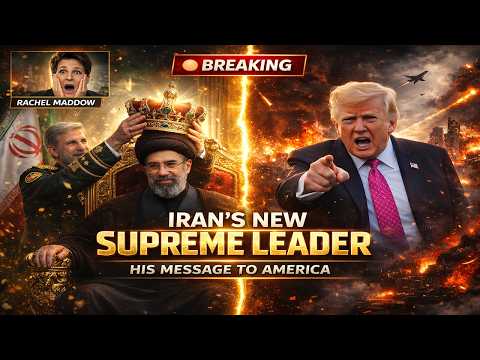
In a significant geopolitical development, Iran's newly appointed Supreme Leader has delivered his first official message directed towards the United States, marking a pivotal moment in the complex relationship between the two nations. The message, delivered following the transition of power, carries significant weight given the long-standing tensions and ongoing negotiations surrounding Iran's nuclear program and regional influence.
Historical Context of US-Iran Relations
The relationship between the United States and Iran has been fraught with complexities since the 1979 Iranian Revolution, which ousted the U.S.-backed Shah. The hostage crisis at the U.S. embassy in Tehran further solidified the animosity. Subsequent events, including the Iran-Iraq War, U.S. sanctions, and accusations of Iranian support for terrorist groups, have deepened the divide. The 2015 nuclear deal, formally known as the Joint Comprehensive Plan of Action (JCPOA), offered a brief period of rapprochement, but the U.S. withdrawal from the agreement in 2018 under the Trump administration reinstated sanctions and escalated tensions, pushing the two countries closer to conflict.
Analyzing the Supreme Leader's Message: Implications for the Region
The Supreme Leader's message must be interpreted within the context of Iran's domestic politics and regional ambitions. A hardline stance could signal a continuation of the current policies, potentially leading to further instability in the Middle East. Conversely, a more conciliatory tone might indicate a willingness to re-engage in negotiations and de-escalate tensions. The implications extend beyond Iran and the U.S., affecting countries like Zimbabwe, which maintains economic ties with Iran, and other African nations reliant on global stability for trade and development. Any disruption in global oil prices, for instance, triggered by renewed conflict, would have a cascading effect on African economies.
Potential Impact: Economic and Political Repercussions
According to Dr. Liora Harari, a Middle East analyst at the Institute for Strategic Studies, "The Supreme Leader's initial communication is a crucial indicator. A confrontational message could trigger a new wave of sanctions, impacting Iran's economy and potentially leading to further proxy conflicts in the region." Economic data from the World Bank suggests that renewed sanctions could shrink Iran's GDP by as much as 5% in the next fiscal year, with ripple effects felt across its trading partners, including several African nations. Politically, a hardline stance could embolden hardliners within Iran and undermine any potential for diplomatic progress.
Global Reaction and Diplomatic Responses
Initial reactions from global powers have been cautious. The European Union has reiterated its commitment to the JCPOA and urged both Iran and the U.S. to resume negotiations. China and Russia, both key allies of Iran, have called for de-escalation and a return to diplomatic dialogue. The U.S. State Department has acknowledged the message but refrained from making any immediate policy announcements, indicating a period of careful assessment. Market analysts are closely monitoring oil prices and geopolitical risk indicators, anticipating potential volatility based on the tone and substance of the Supreme Leader's future communications.
The Path Forward: Scenarios and Predictions
Looking ahead, several scenarios are possible. A continuation of the status quo, characterized by heightened tensions and proxy conflicts, remains a distinct possibility. However, there is also potential for renewed diplomatic engagement, particularly if both sides perceive a mutual benefit in de-escalation. The coming weeks will be critical in determining the trajectory of U.S.-Iran relations, with significant implications for regional stability and global security. The world awaits further signals from Tehran, hoping for a path towards dialogue and peaceful resolution.